How to Start Collecting Pokémon Cards in 2026: Complete Beginner's Guide
Everything you need to know to start collecting Pokémon cards in 2026. From understanding card types and rarities to buying your first products, building a collection strategy, and tracking card values with real tools.
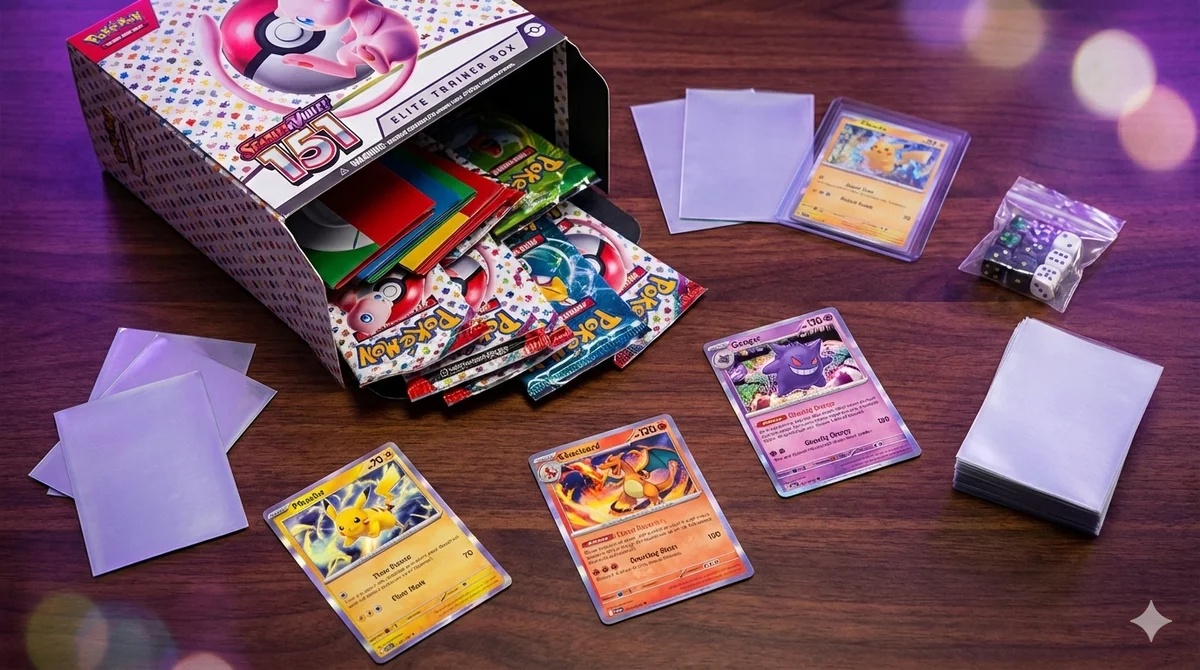
How to Start Collecting Pokémon Cards in 2026: Complete Beginner's Guide
📘 BEGINNER-FRIENDLY GUIDE: Whether you're a returning 90s kid driven by nostalgia or a brand-new collector curious about the hobby, this guide covers every fundamental concept you need to build your first Pokémon card collection in 2026 — from choosing your first product to tracking card values like a pro.
Quick Answer: Starting a Pokémon card collection in 2026 is easier than ever. Begin with an Elite Trainer Box (ETB) from a current set like Ascended Heroes or Chaos Rising for the best value-to-experience ratio. Learn the rarity system (Common → Hyper Rare), decide whether you want to collect for fun, completion, investment, or competitive play, and use free tools like PokéWallet to track your collection's value in real time. Budget $30–$80/month for a sustainable hobby, buy only from authorized retailers to avoid fakes, and protect your valuable pulls with penny sleeves + top loaders immediately. The Pokémon TCG market in 2026 is thriving thanks to the Mega Evolution era revival — there's never been a better time to jump in.
The Pokémon Trading Card Game is experiencing one of its biggest boom periods in history. With the return of Mega Evolutions, record-breaking set launches like Phantasmal Flames and Ascended Heroes, and a collector base spanning from Gen-1 nostalgics to Gen-Z newcomers, the hobby has never been more accessible or exciting. But for new collectors, the sheer volume of products, terminology, and market dynamics can feel overwhelming. This guide breaks everything down step by step.
Key Takeaways
- 🎯 Start with an ETB: Elite Trainer Boxes offer the best intro experience at $45–$55 MSRP
- 📊 Understand rarity tiers: From Common (●) to Special Illustration Rare (★★) — rarity drives value
- 💰 Set a budget: $30–$80/month keeps the hobby sustainable and enjoyable
- 🛡️ Protect your cards: Penny sleeves + top loaders cost pennies but save hundreds
- 🏪 Buy from authorized sources: Target, Walmart, Pokémon Center, local game stores — avoid random Amazon sellers
- 📈 Track your collection: Free tools like PokéWallet API give you real-time price data on 50,000+ cards
- 🧠 Pick a strategy: Casual opening, set completion, investment, or competitive play — each has different approaches
- ⚠️ Avoid common mistakes: Don't chase FOMO, don't overpay at launch, and never buy unverified singles online
⚡ Quick Navigation
Table of Contents
- Why Collect Pokémon Cards in 2026?
- Understanding Pokémon Card Types and Rarities
- What Products Should You Buy First?
- Where to Buy Pokémon Cards Safely
- Building Your Collection Strategy
- How to Protect and Store Your Cards
- Tracking Your Collection's Value
- Common Mistakes New Collectors Make
- Frequently Asked Questions
Why collect Pokémon cards in 2026?
📌 TL;DR: 2026 is a golden era for Pokémon TCG collecting. The Mega Evolution comeback has revitalized the game, card prices are stabilizing after the 2021–2023 pandemic bubble, and tools for tracking and managing collections have never been better. Whether you're nostalgic for the originals or drawn in by modern artwork, it's one of the best entry points in the hobby's 30-year history.
The Pokémon TCG in 2026 is experiencing a renaissance driven by nostalgia, innovation, and accessibility. Several converging factors make this year uniquely appealing for newcomers.
The Mega Evolution Revival
The return of Mega Evolution mechanics starting with Phantasmal Flames in late 2025 has injected enormous excitement into the TCG. Sets like Ascended Heroes and the upcoming Chaos Rising feature beloved Pokémon like Mega Charizard, Mega Gengar, and Mega Rayquaza in stunning modern artwork that appeals to both veteran collectors and newcomers.
Market Stabilization
After the explosive pandemic-era boom (2020–2023) and subsequent correction, the Pokémon card market has entered a healthier, more sustainable growth phase:
| Period | Market Condition | What It Means for New Collectors |
|---|---|---|
| 2020–2021 | Pandemic boom — prices skyrocketed | Products impossible to find at retail |
| 2022–2023 | Market correction — bubble burst | Prices dropped, some collectors exited |
| 2024–2025 | Stabilization — healthy growth returns | Sustainable prices, good retail availability |
| 2026 | Renaissance — Mega Evolution era | Best entry point: stable prices + exciting releases |
A Thriving Community
The Pokémon TCG community in 2026 is massive and welcoming. From YouTube opening channels and Reddit communities to local game store events and Discord groups, there are countless ways to connect with fellow collectors, learn the hobby, and share your pulls.
Understanding Pokémon card types and rarities
📌 TL;DR: Every Pokémon card has a rarity symbol in the bottom corner. Commons (●) are worth pennies, while Special Illustration Rares (★★) and Hyper Rares can be worth hundreds or thousands. The current Scarlet & Violet / Mega Evolution era uses a rarity system ranging from Common to Hyper Rare. Understanding these tiers is the single most important skill for new collectors.
Rarity determines everything in Pokémon card collecting — from a card's market value to its pull rate from booster packs. Understanding the hierarchy is essential before you spend your first dollar.
Card Rarity Hierarchy (2026 Current Era)
| Rarity | Symbol | Typical Value | Pull Rate (approx.) | Collector Appeal |
|---|---|---|---|---|
| Common | ● | $0.05–$0.25 | ~60% of pack | Bulk — trade fodder |
| Uncommon | ◆ | $0.10–$0.50 | ~25% of pack | Slight step up, still bulk |
| Rare | ★ | $0.25–$3.00 | ~1 per pack | Starter collectibles |
| Double Rare (ex) | ★★ | $1–$30 | 1 in 5–8 packs | Core chase cards |
| Ultra Rare | ★★ (gold) | $5–$50 | 1 in 15–20 packs | Premium pulls |
| Illustration Rare | ★★ | $10–$100 | 1 in 20–30 packs | Art-driven collecting |
| Special Illustration Rare | ★★ | $20–$600+ | 1 in 50–80 packs | Top chase — the "hits" |
| Hyper Rare (Gold) | Crown/★★★ | $30–$300+ | 1 in 100+ packs | Ultra-premium rarity |
Card Types You'll Encounter
Basic Pokémon cards come in several functional categories:
- Regular Pokémon: Standard cards for gameplay and collection
- ex Cards: Premium cards with higher HP and powerful attacks, featuring full-art or special illustration variants
- Mega Evolution ex: The 2025–2026 era headliners — Mega-evolved Pokémon with spectacular artwork
- Trainer Cards: Items, Supporters, and Stadiums that support gameplay strategies
- Energy Cards: Required for attacks — Basic Energy is common, Special Energy can be rare
What Makes a Card Valuable?
Four key factors drive Pokémon card value:
- Rarity: Higher rarity = higher value (generally)
- Pokémon Popularity: Charizard, Pikachu, Mew, Gengar, and Eevee consistently command premiums
- Artwork Quality: Cards illustrated by artists like Kouki Saitou, HYOGONOSUKE, or danciao carry collector premiums
- Competitive Playability: Cards that dominate the tournament meta see increased demand from players
What products should you buy first?
📌 TL;DR: Start with an Elite Trainer Box ($45–$55) for the best all-in-one experience — you get 9 booster packs, sleeves, dice, and storage. If you're on a tighter budget, a Booster Bundle (6 packs, ~$25) gives you more packs per dollar. Avoid buying individual booster packs from retail stores unless you just want a casual rip.
Choosing your first Pokémon TCG product can be overwhelming — there are dozens of options at every price point. Here's a clear breakdown of every product type, ranked by value for new collectors.
Product Comparison for Beginners
| Product | Price (MSRP) | Packs Included | Extras | Best For |
|---|---|---|---|---|
| Single Booster Pack | $4.49–$4.99 | 1 pack (10 cards) | — | Quick casual opening |
| 3-Pack Blister | $13.99 | 3 packs | 1 promo card | Budget opening session |
| Booster Bundle | $24.99 | 6 packs | — | ⭐ Best value per pack |
| Elite Trainer Box | $44.99–$54.99 | 9 packs | Sleeves, dice, box, promo | ⭐ Best first purchase |
| Collection Box | $24.99–$39.99 | 4–5 packs | Promo card, jumbo card | Theme-specific collecting |
| Booster Box (standard sets) | $129.99–$144.99 | 36 packs | — | Serious opening / investment |
| Premium Collection | $49.99–$89.99 | 8–12 packs | Premium promo, pin, extras | Gift / display piece |
Our Recommendation: Start with an ETB
The Elite Trainer Box is the gold standard first purchase for any new collector. Here's why:
- 9 booster packs: Enough to experience the thrill of opening without breaking the bank
- 65 card sleeves: Immediately protect your pulls — no need to buy separately
- Storage box: Attractive box doubles as your first card storage solution
- Dice, markers, and accessories: Everything you need if you want to try playing the game
- Promo card: Exclusive card not available in booster packs
Which Set Should You Choose?
For beginners entering in early 2026, here are the recommended sets:
| Set | Release | Why It's Good for Beginners | Chase Card Appeal |
|---|---|---|---|
| Ascended Heroes | Jan 2026 | Mega Evolution hype, iconic Pokémon | Mega Charizard Y ex, Mega Gengar ex |
| Chaos Rising | May 2026 | Latest standard set, widely available | TBA — upcoming reveals |
| Phantasmal Flames | Nov 2025 | Great Mega Evolution intro, good availability | Mega Charizard X ex |
| Perfect Order | Sep 2025 | Affordable older set, easy to find | Mega Zygarde ex |
Where to buy Pokémon cards safely
📌 TL;DR: Stick to authorized retailers — Target, Walmart, Best Buy, GameStop, Pokémon Center, and local game stores. Avoid random Amazon third-party sellers and Facebook Marketplace for sealed product. For singles, use TCGPlayer (US) or CardMarket (EU) with seller ratings. Counterfeit cards are a serious problem in 2026 — if the price seems too good to be true, it probably is.
Buying from the right sources is critical to avoid counterfeit cards, tampered products, and overpriced listings. The Pokémon card market's growth has unfortunately attracted scammers, making source verification essential.
Authorized Retail Sources
For Sealed Products (Booster Packs, ETBs, Boxes):
| Retailer | Pros | Cons | Best For |
|---|---|---|---|
| Pokémon Center Online | Official source, exclusive products, reliable | Often sells out quickly | Exclusive variants, guaranteed authentic |
| Target / Walmart | MSRP pricing, convenient, widespread | Stock varies by location | Regular purchases at fair prices |
| Best Buy | Often has stock when others don't | Limited selection | Backup option |
| GameStop | Pre-orders, loyalty rewards | Occasional markup on specialty items | Pre-ordering upcoming releases |
| Local Game Stores (LGS) | Expert staff, community events, pre-release access | Slightly higher prices sometimes | Community + buying experience |
For Singles (Individual Cards):
| Platform | Region | Fees | Buyer Protection | Best For |
|---|---|---|---|---|
| TCGPlayer | US / Global | ~12% seller fee | Strong dispute resolution | US singles buying |
| CardMarket | Europe | ~5% seller fee | EU buyer protection | European collectors |
| eBay | Global | ~13% seller fee | eBay Money Back Guarantee | Rare / vintage singles |
Red Flags to Avoid
⚠️ Warning signs of counterfeit or scam products:
- Amazon third-party sellers listing sealed product below MSRP
- Facebook Marketplace sealed product deals that seem too cheap
- "Resealed" booster boxes — check shrink wrap quality and seam patterns
- Singles with suspiciously low prices compared to market average
- Sellers without ratings or reviews on marketplaces
- Bulk lots advertised as "guaranteed hits" — often picked through with rares removed
Building your collection strategy
📌 TL;DR: There are four main collecting approaches: casual opening (just for fun), set completion (collect every card in a set), investment collecting (buy for long-term value), and competitive play (build tournament decks). Most new collectors start casual and naturally evolve into one or more of these paths. Pick the one that excites you — there's no wrong answer.
The biggest mistake new collectors make is not having a strategy. Without a clear goal, it's easy to overspend, accumulate bulk cards you don't care about, and lose enthusiasm. Here are the four main approaches.
The Four Collection Strategies
1. 🎲 Casual Opening — "The Fun Route"
Best for: People who love the thrill of opening packs and discovering what's inside.
- Budget: $30–$60/month
- What to buy: Booster Bundles, ETBs, the occasional collection box
- Goal: Enjoy the dopamine hit of pulling rare cards
- Tip: Set a strict monthly budget and stick to it — pack opening FOMO is real
2. 📋 Set Completion — "The Completionist"
Best for: Organized collectors who want to own every card from a specific set.
- Budget: $100–$300+ per set (depending on chase card prices)
- What to buy: Start with sealed product for commons/uncommons, then buy remaining singles individually
- Goal: Complete the master set checklist (including secret rares)
- Tip: Open 1–2 booster boxes to build your base, then buy the remaining singles from TCGPlayer/CardMarket. This is significantly cheaper than trying to pull everything from packs
3. 💰 Investment Collecting — "The Strategist"
Best for: Collectors who treat cards as alternative assets with appreciation potential.
- Budget: Variable — focus on quality over quantity
- What to buy: Sealed ETBs, booster boxes of sets with strong chase cards, graded singles
- Goal: Acquire cards/products that appreciate in value over 1–5+ years
- Tip: Read our market analysis articles and Scarlet & Violet vs Mega Evolution investment guide to understand market dynamics before committing capital
4. ⚔️ Competitive Play — "The Battler"
Best for: Players who want to compete in official Pokémon TCG tournaments at local game stores and regional events.
- Budget: $50–$150 per competitive deck
- What to buy: Singles for specific meta decks, deck building kits, league battle decks
- Goal: Build competitive decks and win tournaments
- Tip: Buy singles for your deck — never try to pull competitive cards from packs. Check competitive tier lists at sites like Limitless TCG before investing in a deck build
Hybrid Approach (Recommended for Beginners)
Most experienced collectors use a hybrid approach, and we recommend beginners do the same:
- Open some sealed product for fun and to learn card types and rarities
- Identify which cards excite you — is it the art? The value? The gameplay?
- Buy singles to fill gaps in your collection rather than chasing packs endlessly
- Track your collection's value using PokéWallet to see how your hobby investment performs
How to protect and store your cards
📌 TL;DR: Immediately sleeve every rare card you pull in a penny sleeve + top loader combo. Store bulk commons in a card binder or BCW box. For high-value pulls ($50+), consider double-sleeving and storing in a cool, dry, dark environment. Never use rubber bands, and avoid touching card surfaces with bare fingers if you plan to grade later.
Card condition is everything for long-term value. A near-mint Mega Charizard Y ex can be worth 3–5x more than the same card with whitening, scratches, or print lines. Protecting your cards from day one is one of the smartest habits you can develop.
Essential Protection Supplies
| Supply | Cost | What It Does | Priority |
|---|---|---|---|
| Penny Sleeves | ~$3 per 100 | Soft clear sleeve — first line of defense | 🔴 Essential |
| Top Loaders | ~$8 per 25 | Rigid plastic holder over penny sleeve | 🔴 Essential for rares |
| Card Binder (9-pocket) | $15–$30 | Display and organize collection | 🟠 Highly recommended |
| BCW Card Storage Box | $3–$8 | Store bulk commons and uncommons | 🟡 Convenient |
| Semi-Rigid Card Holders | ~$10 per 50 | Used for grading submissions | 🟡 If planning to grade |
| One-Touch Magnetic Cases | $3–$10 each | Premium display for chase cards | 🟡 For showcase cards |
Protection Best Practices
When you pull a valuable card:
- Don't touch the surface — hold cards by their edges only
- Sleeve it immediately — insert into a penny sleeve (open end up)
- Top loader it — slide the sleeved card into a rigid top loader
- Store upright in a cool, dark, dry environment (avoid direct sunlight, humidity, and heat)
Storage DON'Ts:
- ❌ Never use rubber bands around card stacks
- ❌ Never store cards in direct sunlight or near heat sources
- ❌ Never stack heavy objects on top of cards
- ❌ Don't use binders with ring mechanisms that can bend cards
- ❌ Avoid storing in garages, attics, or basements (humidity and temperature swings)
Tracking your collection's value
📌 TL;DR: Use free tools like PokéWallet API to track real-time market prices across TCGPlayer and CardMarket. Knowing your collection's value helps you make informed buying and selling decisions, spot trends early, and avoid overpaying. Don't guess — use data.
Serious collectors track their collection's market value in real time. Pokémon card prices fluctuate constantly based on supply, demand, tournament results, upcoming releases, and community hype. Without price tracking, you're essentially collecting blind.
Why Price Tracking Matters
| Scenario | Without Tracking | With Tracking |
|---|---|---|
| Pulling a rare card | "I think this is worth something?" | "This is worth $145 on TCGPlayer right now" |
| Buying singles | Overpay based on seller's listing | Know exact market price, negotiate informed |
| Selling cards | Underprice by guessing | List at competitive market value |
| Portfolio monitoring | No idea of total value | Real-time dashboard of collection worth |
| Market timing | Miss correction windows | Buy during dips, sell during peaks |
Tools for Tracking Card Values
PokéWallet provides the most comprehensive free solution for price tracking in 2026:
- 50,000+ cards in the database with real-time pricing
- TCGPlayer + CardMarket dual-market coverage
- Free API access — integrate price data into your own tools and spreadsheets
- Historical price charts — see trends over weeks, months, and years
- Set-level analytics — track the performance of entire sets, not just individual cards
Building Your First Price Watchlist
When starting out, monitor these categories:
- Your top pulls — track the value of every card worth $5+
- Cards you want to buy — set price alerts to buy during dips
- Set benchmarks — track the top 10 chase cards in a set to gauge overall market direction
- Sealed product trends — monitor ETB and booster box prices to spot appreciation or dips
Common mistakes new collectors make
📌 TL;DR: The biggest mistakes are chasing packs instead of buying singles, falling for FOMO-driven overspending, buying counterfeit products, neglecting card protection, and not having a budget. Avoiding these pitfalls will save you hundreds of dollars and keep the hobby enjoyable long-term.
Every experienced collector has made at least one of these mistakes. Learning from others' errors saves you money and frustration.
The 8 Biggest Mistakes (and How to Avoid Them)
1. 🎰 Chasing the Pack Lottery
- The mistake: Buying 50+ packs trying to pull one specific card
- The fix: If you want a specific card, buy the single. Pack-to-single math almost never favors opening packs for a specific chase card
2. 💸 FOMO Buying at Launch
- The mistake: Paying 2–3x markup on launch day for products and singles
- The fix: Wait 4–6 weeks for supply to catch up with demand. Prices almost always drop 20–40% after launch hype fades
3. 🃏 Buying from Unverified Sources
- The mistake: Purchasing "deals" from random social media sellers or Amazon third-party listings
- The fix: Stick to authorized retailers for sealed product and high-rated sellers on TCGPlayer/CardMarket for singles
4. 📦 Not Protecting Cards Immediately
- The mistake: Tossing rare pulls into a pile or shoebox
- The fix: Sleeve and top-load every card worth $3+ immediately upon pulling. The $0.10 investment in protection can preserve hundreds in value
5. 💳 No Budget Discipline
- The mistake: Spending $300+ in a month on impulse buys and "just one more pack"
- The fix: Set a fixed monthly hobby budget and track spending. The hobby should bring joy, not financial stress
6. 📊 Ignoring Market Data
- The mistake: Buying and selling without checking current prices
- The fix: Check PokéWallet or TCGPlayer before every transaction. A 30-second price check can save you $20–$100
7. 🏗️ Trying to Collect Everything at Once
- The mistake: Buying from 5 different sets simultaneously with no focus
- The fix: Pick one or two sets to focus on. Complete or near-complete those before branching out
8. 😤 Comparing Your Collection to Others
- The mistake: Feeling inadequate watching YouTubers open $10,000 worth of product
- The fix: Collect at YOUR pace, with YOUR budget. A $50 collection you love beats a $5,000 collection that stressed you out
Frequently asked questions
How much money do I need to start collecting Pokémon cards?
You can start collecting Pokémon cards for as little as $5 with a single booster pack, but we recommend beginning with an Elite Trainer Box ($45–$55) for the best experience. A sustainable monthly budget of $30–$80 lets you participate in new releases, buy occasional singles, and grow your collection without financial strain. There's no minimum investment — collect at whatever level brings you joy.
What's the best Pokémon set to collect in 2026?
For new collectors in early 2026, Ascended Heroes offers the perfect entry point with its Mega Evolution theme, iconic chase cards like Mega Charizard Y ex, and the excitement of a fresh release. Alternatively, Phantasmal Flames provides excellent value with wider availability and proven chase cards. Both sets feature the beloved Mega Evolution mechanic that bridges nostalgia and modern card design.
Are Pokémon cards a good investment?
Pokémon cards CAN BE a good investment, but they are NOT a guaranteed one. Premium chase cards and sealed ETBs from popular sets have historically appreciated 20–100%+ over 2–5 years, but many cards lose value after initial hype fades. Treat Pokémon cards as a hobby first, investment second. Never invest money you can't afford to lose, and read our market analysis guides to understand risks and opportunities before committing capital.
How can I tell if a Pokémon card is fake?
Key authentication checks include: the light test (real cards have a black layer between the front and back — hold up to a light), texture feel (real cards have a specific card stock weight and surface finish), font consistency (fakes often have slightly off typography), color accuracy (compare against verified images on PokéWallet), and the rip test (only as a last resort — genuine cards have a black core layer between front and back paper). Buy from authorized sources to minimize fake risk entirely.
Should I buy booster packs or individual cards?
For new collectors, buy sealed products (ETBs, Booster Bundles) for the opening experience and individual singles for specific cards you want. Statistically, buying singles for a specific card is almost always cheaper than trying to pull it from packs. A $200 chase card might take 50–80 packs ($250–$400) to pull on average. The best approach is hybrid: open some packs for fun, buy specific chase cards as singles.
How do I check how much my Pokémon card is worth?
Use PokéWallet to check real-time market prices across TCGPlayer and CardMarket for free. Search for your card by name, set, or card number to see current market value, price history, and trend data. For the most accurate valuation, check the specific rarity version you own (regular, full art, special illustration rare, etc.) and consider the card's condition — near-mint cards command significantly higher prices than played or damaged copies.
What's the difference between an ex and a Mega Evolution ex?
Regular ex cards are standard premium Pokémon with enhanced HP and powerful attacks that give up two prize cards when knocked out. Mega Evolution ex cards are the 2025–2026 era's premier mechanic — they evolve FROM ex cards, feature even higher HP and more powerful attacks, and showcase spectacular full-art and special illustration designs. Mega Evolutions represent the top-tier chase cards in current sets and are inspired by the beloved X & Y era mechanic from 2013–2016.
How do I store and organize my Pokémon cards?
For valuable cards ($5+): penny sleeve first, then top loader, stored upright in a cool, dry environment. For display: use a 9-pocket binder with side-loading pages (top-loading pages let cards fall out). For bulk commons and uncommons: BCW card storage boxes organized by set name. Never use rubber bands, avoid direct sunlight and humidity, and hold cards by edges only to prevent fingerprint damage on surfaces you might grade later.
Content accuracy & disclaimer
Data Accuracy Statement: All pricing information, product details, and market analysis reflect current conditions as of February 20, 2026. Pokémon TCG product prices, availability, and card values fluctuate regularly based on market dynamics, new releases, and competitive meta shifts.
Investment Disclaimer: This article provides market context for informational and educational purposes only and does not constitute financial advice. Pokémon TCG products and singles carry inherent risks including market volatility, condition sensitivity, counterfeit products, and potential loss of value.
Before making purchases:
- Verify product pricing at authorized retailers before buying
- Only purchase from authorized sources to ensure authenticity
- Set realistic collecting budgets aligned with your financial situation
- Research specific cards and sets before significant purchases
- Use price-tracking tools to make data-driven buying decisions
Start Your Collection Journey with PokéWallet
Every serious Pokémon card collector needs reliable market data — and free access to it. Whether you're checking if that $5 flea market find is actually worth $500, monitoring price drops on a chase card you want, or tracking your growing collection's total value, PokéWallet gives you the tools the pros use — completely free to start.
PokéWallet API is now live — start tracking card prices for free:
- 💰 Real-time prices from TCGPlayer & CardMarket — free on every plan
- 🃏 50,000+ cards database — complete TCG coverage across all modern sets
- 📊 Historical price charts — track trends over weeks, months, and years
- 🔔 Price alerts — get notified when cards hit your target buy price
- 📈 Collection portfolio tracking — know your total collection value in real time
- 🔍 Set analytics — see which sets are performing best for collectors and investors
Stay Updated:
- 🚀 Start Free — No credit card required
- 📝 Read more Pokémon TCG guides and market analysis
- 💬 Join our Discord for collector community discussion and price alerts
- 📱 Follow @pokewallet.io for daily card reveals and market updates
Track real-time Pokémon card prices for free. No credit card required.