One Piece TCG Rarity Guide: Every Symbol Explained — C, UC, R, SR, L, SEC & Alternate Art
The complete 2026 One Piece TCG rarity guide. Learn what every card symbol means, from Common circles to Secret Rares, Leaders, and Alternate Arts.
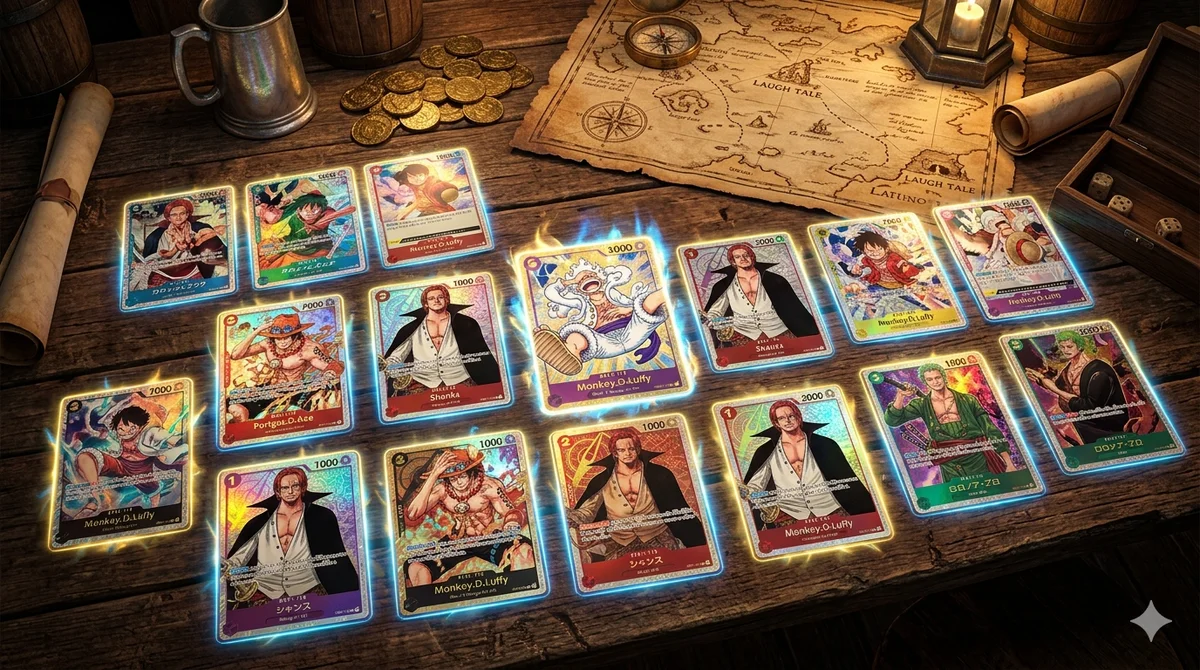
One Piece TCG Rarity Guide: Every Symbol Explained — C, UC, R, SR, L, SEC & Alternate Art
📘 EXPERT COLLECTING GUIDE: Understanding rarity is the foundation of collecting and investing in the One Piece Card Game. As the fastest-growing TCG, One Piece features standard rarities like Common and Rare, but introduces complex hits like Alternate Arts, Secret Rares (SEC), and highly coveted Leader cards. This guide breaks down exactly what every symbol means so you know when you've hit the ultimate treasure.
Quick Answer: The one piece card rarity guide is simple once you know the letters on the bottom-right of your card. C means Common, UC means Uncommon, R means Rare, and SR means Super Rare. A SEC means Secret Rare, which is extremely hard to pull. A L symbol means Leader card. If a card has stars above its rarity, it is an Alternate Art (often called Alt Art) and is highly valuable!
When you rip open a fresh pack of One Piece TCG cards, you are stepping into the Grand Line. But if you do not understand the one piece card symbols meaning, how do you know if you found the One Piece?
Unlike Pokémon, which uses shapes, the One Piece TCG uses letters on the bottom right of the card to denote rarity. Whether you are hunting for a massive SEC one piece card or trying to understand the difference between one piece SR vs L, this is your master class on One Piece card rarities.
Key Takeaways
- 📉 The Baseline Basics: C (Common), UC (Uncommon), and R (Rare) form the foundation of your deck.
- 🏴☠️ The Core Hits: SR (Super Rare) and SEC (Secret Rare) are your standard box pulls and chase cards.
- 👑 The Commanders: L (Leader) cards determine how you play the game and come in multiple rarities.
- 🎨 The Ultimate Chase: Alternate Arts (Alt Arts) feature stamped stars and unique manga-style full art, representing the true investment value.
⚡ Quick Navigation
How to Read One Piece Card Symbols: The Basics
Every officially printed One Piece card has a set code and a rarity letter physically printed on the bottom right corner. Let's cover the foundational tier: what do one piece card symbols mean for the average pack?
1. Common (C)
Symbol: The letter "C". Commons make up the majority of your booster pack. They feature standard artwork and form the bulk of gameplay. They hold very little standalone value, but you need them to build a functional deck.
2. Uncommon (UC)
Symbol: The letters "UC". Uncommons appear multiple times per pack. They usually depict key characters or powerful Event/Stage cards. They are essential for playing but are typically considered bulk by collectors.
3. Rare (R)
Symbol: The letter "R". A standard Rare card has shiny, foil treatment (holographic). Every One Piece booster pack guarantees at least a Rare or better in the final slot. They have solid gameplay value and beautiful art, but due to high print numbers, standard Rares are not typically expensive.
Super Rare vs Secret Rare Explained
This is where the excitement begins. When you pull one of these, you have hit something special.
Super Rare (SR)
Symbol: The letters "SR". Super Rares feature intense foil, high-quality textures, and usually depict the most popular characters or most powerful cards in a given set. You typically pull about 7 to 8 Super Rares per standard booster box. They have decent value, especially if they are heavily used in tournament meta decks.
Secret Rare (SEC)
Symbol: The letters "SEC". A SEC one piece card is a major chase. Secret Rares are completely full-art by default, featuring stunning golden borders or deeply textured patterns. Every set only has two distinct Secret Rare characters. You are not guaranteed to get all of them in a booster box. These cards consistently hold high value over time.
Leader Cards Explained
Leader (L)
Symbol: The letter "L". In One Piece TCG, the Leader is the most important card in your deck. It dictates your life points, colors, and strategy. You pull Leaders fairly frequently (every few packs). Standard Leaders are not exceptionally valuable—but wait until you find an Alternate Art Leader.
Looking to understand how these compare to Pokémon? Check out our Pokémon Card Rarity Guide for a full breakdown of stars, Ultra Rares, and Secret Illustration Rares!
The Art Era: Alternate Arts and Manga Rares
What makes One Piece TCG so incredibly explosive on the secondary market? The Alternate Arts. If you see a small star (⭐) printed directly above the rarity letter (like C, R, SR, L, or SEC), you have struck pirate treasure.
Alternate Art (AA / Paralell)
Symbol: A ⭐ above the rarity letter. An one piece tcg alternate art card takes an existing card from the set and gives it entirely new, often borderless, breathtaking art.
- You can find Alternate Art Leaders (the most popular collecting focus).
- Alternate Art Super Rares (SR).
- Alternate Art Secret Rares (SEC).
If a collector asks about one piece SR vs L, they usually mean the Alternate Art versions. An Alt Art Leader (L) is almost always more expensive than an Alt Art Super Rare (SR).
Manga Rare (Super Alternate Art)
Symbol: A ⭐ above the SEC or SR rarity (varies by set), but features a distinct manga-panel background. The Manga Rare is the absolute pinnacle of One Piece cards. They are the equivalent of a "God Pack" pull. Characterized by actual panels from the One Piece manga floating in the background behind the character, these cards have astronomical pull rates and command thousands of dollars.
Frequently Asked Questions
What do one piece card symbols mean?
One Piece card symbols are letters at the bottom right that indicate the rarity: C (Common), UC (Uncommon), R (Rare), SR (Super Rare), SEC (Secret Rare), and L (Leader).
What makes a SEC one piece card so special?
A SEC (Secret Rare) card is one of only two special high-rarity cards per set. They feature unique full-art treatments and textures and are inherently much harder to pull than Super Rares (SR).
What is the difference between one piece SR vs L?
SR stands for Super Rare, which is a highly powerful foil card. L stands for Leader, which is the foundational card of your deck. While basic Leaders are common, Alternate Art Leaders (L with a star) are among the most valuable cards in the game, often outpricing Alternate Art Super Rares (SR).
How can I identify a one piece tcg alternate art card?
Look for a small star (⭐) printed just above the rarity letter (like L, SR, or SEC) at the bottom right. The card will also feature completely different, usually borderless artwork compared to its standard counterpart in the same set.
How do One Piece rarities compare to Pokémon TCG?
While Pokémon uses shapes (circles, diamonds, stars) and overlapping letters for modern sets (IR, SIR, HR), One Piece relies solely on clear acronyms (C, UC, R, SR, SEC, L) and a star above the letter to denote Alternate Arts. If you're a Pokémon collector jumping into OP, think of Alternate Arts (AA) as your Special Illustration Rares (SIR).
Final Review: Know Your Pulls
When you start chasing the 2026 sets or back-collecting classic boxes, keep this hierarchy in mind. If you see that star (⭐) denoting an Alternate Art, sleeve it up immediately.
The art of collecting lies in understanding what you hold. Don't trade a Manga Rare away thinking it is just a standard Secret Rare!
Track Your Multi-TCG Journey:
- 💰 Find Out What Your Cards Are Worth: PokeWallet is expanding! Use the One Piece Card Game API to track both Pokémon and One Piece collections in one unified portfolio.
- 📝 Read our deep-dive on Pokémon Rarities if you collect both!
- 💬 Connect with us on our Discord Community to flex your latest Pull.
- 📱 Don't miss out on upcoming collection news—follow @pokewallet.io.
Stop guessing what your cards are worth. Start tracking with PokéWallet.